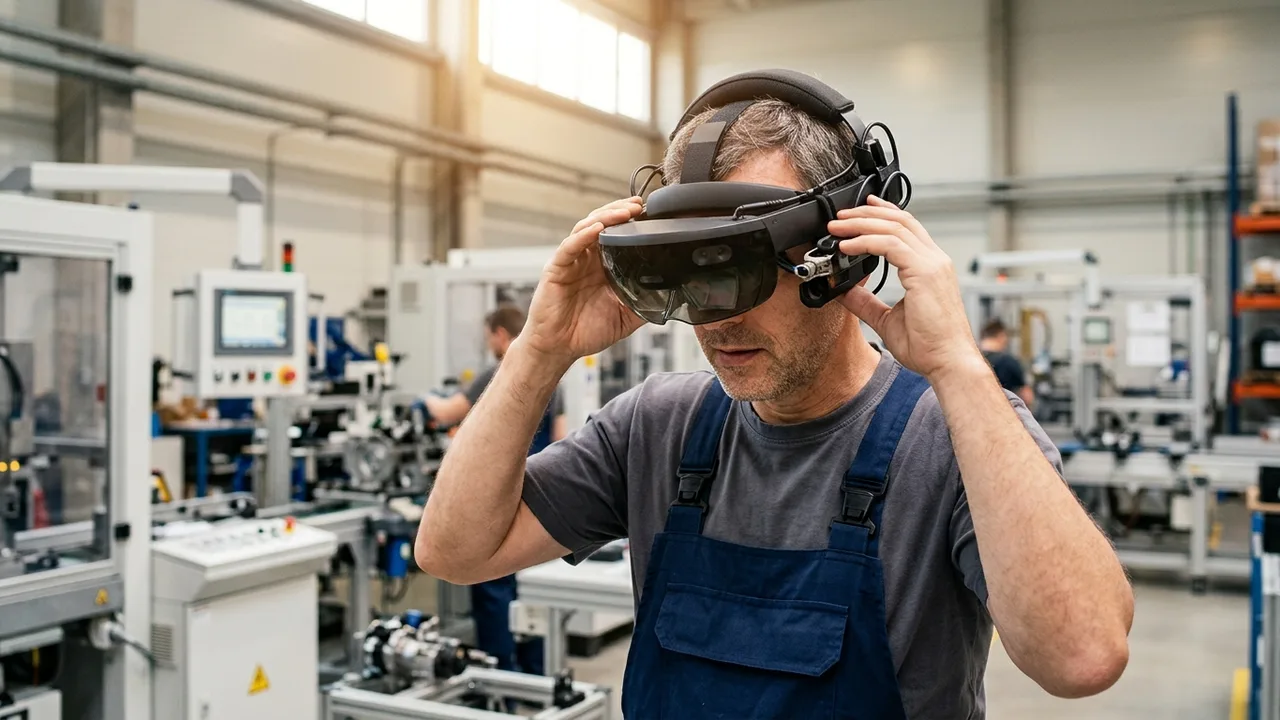
Artificial intelligence (AI) is changing the world of work very quickly. Many people feel overwhelmed by it. A new group called RAISE US wants to help. It is investing $500 million in employee training. This is to prepare people for future jobs.
The fear of losing one's job to AI is great. Many companies use AI tools but do not prepare their employees for them. This initiative shows: Technology is developing faster than people can adapt. Those who do not learn to work with AI now will fall behind. One could be left behind by the development.
A new group called RAISE US has formed. Its goal is to prepare workers for rapid AI changes. They are starting with over $500 million in capital. This money will go directly into retraining programs. People are to learn new skills for an AI-driven economy. This is a direct response to the growing concern about job losses due to AI.
For you as an employee, this means: Your current skills could soon be worth less. If you don't use AI tools well, others might be faster and better. This goes beyond simple commands to AI. It's about understanding how AI agents, i.e., autonomous AI programs, perform tasks. You need to learn to control them, rather than just watching. Those who train now will secure their job and remain important.
Companies that do not train their employees run a risk. Their teams could remain inefficient. There is also a threat of a major shortage of skilled workers. The competition will not wait. Companies must now invest in training their employees. This is the only way they can fully utilize the benefits of AI. They also ensure that their processes and data do not disappear into opaque AI systems that no one understands anymore.
The biggest opportunity lies in redesigning professions. Those who learn to develop, monitor, and improve AI systems will become sought-after experts. AI agents are like interns: they don't just make suggestions, but perform tasks independently. Those who guide these 'interns' become indispensable. New professional fields are emerging that combine creativity, strategic thinking, and AI understanding.
The biggest risk is doing nothing. Those who think the AI wave will pass or only affect others will be surprised. Companies risk a 'lock-in', i.e., a dependency. This happens when they blindly rely on solutions from providers. They then do not build up their own knowledge to control these. The loss of control over data and processes is also a problem. This happens when AI systems work without human approval.