
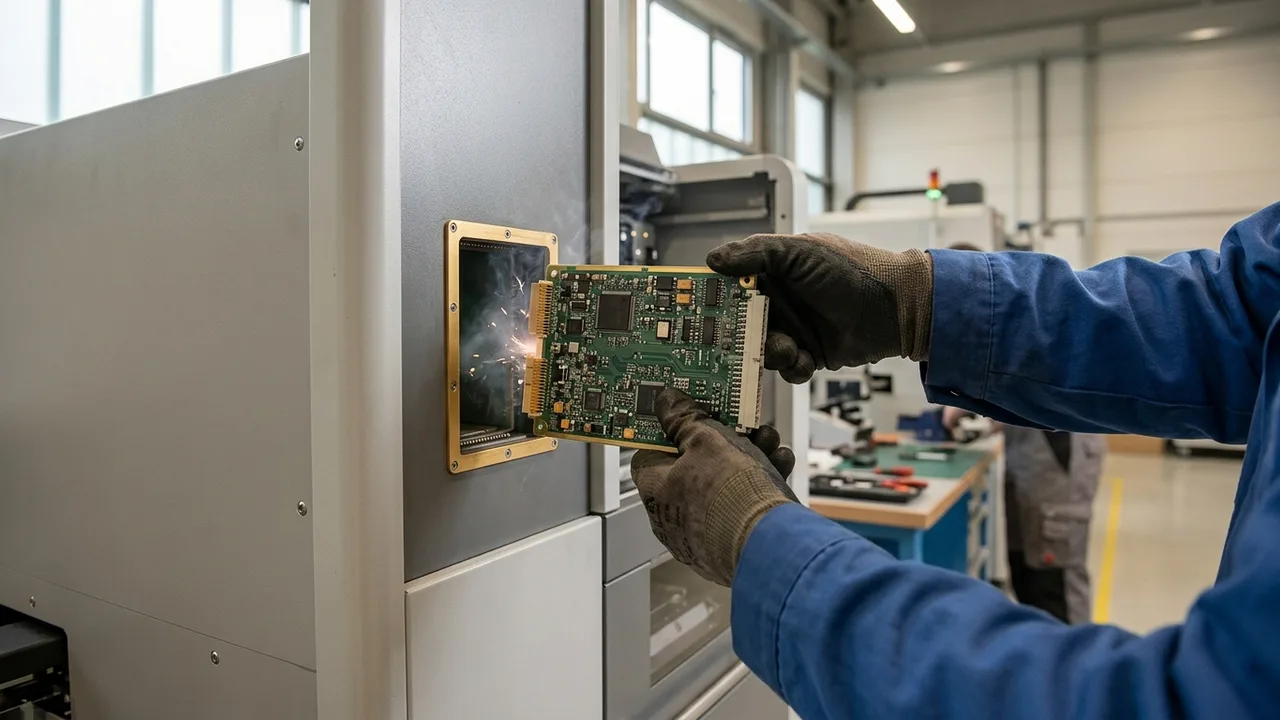
**Update 02:02 AM:** The new source reveals the codename of the chip developed by OpenAI and Broadcom: 'Jalapeño'. This places OpenAI on a growing list of companies like Google, Apple, and SpaceX that are developing their own chips.
OpenAI, the company behind the ChatGPT chatbot, is working with chip manufacturer Broadcom. Their goal is to develop their **own AI chip**. This chip is to be specifically optimized for the 'inference' problem of large language models.
This move by OpenAI and Broadcom is a direct **attack on Nvidia's dominance**. Until now, Nvidia has almost completely controlled the market for AI chips, leading to bottlenecks and high prices. If OpenAI develops its own chips, they can reduce costs, more precisely control the performance of their models, and reduce their **dependence on a single provider**. For everyone who lives with or from AI, this means a possible **shift in power**.
The renowned tech magazine Ars Technica reports that OpenAI and semiconductor giant Broadcom are designing a special chip for the **inference** of AI language models. Inference is the process by which a trained AI processes new data and makes predictions – for example, when ChatGPT generates an answer. The move comes because the demand for powerful chips for AI models is enormous, and current supply chains are reaching their limits.
For you as a user, this could primarily mean **faster and more stable AI services**. If inference, i.e., the calculation of answers, becomes more efficient, chatbots load faster and deliver smoother results. Imagine asking an AI for a recipe, and the answer not only comes immediately, but the AI can also understand complex contexts in real-time. This makes usage more pleasant and intuitive.
Companies that rely heavily on large language models could benefit enormously from this development. Their own chips potentially mean **lower operating costs** for OpenAI. These savings could be passed on to corporate customers. This lowers the barrier for deploying AI on a large scale. At the same time, however, a **new risk of 'lock-in'** arises: if companies adapt their workflows too much to OpenAI's specific hardware, switching to other providers becomes more difficult and expensive.
The development of proprietary chips opens up great opportunities for **innovation and specialization**. Companies can run AI models on hardware perfectly tailored to their needs in the future. This leads to **higher efficiency** for specific tasks. New **career opportunities** also arise for professionals in chip design and AI hardware, as more expertise will be required in this area.