
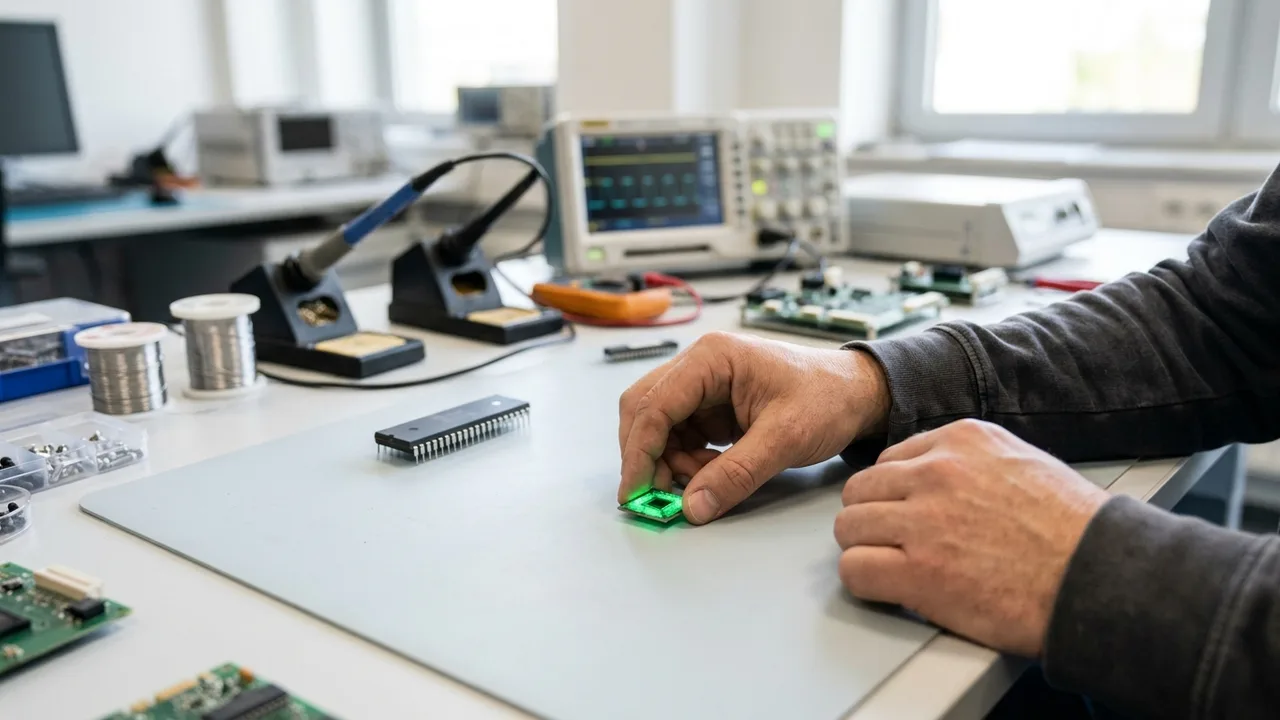
OpenAI, the company behind ChatGPT, has taken a significant step. They have introduced their first proprietary AI chip. The chip is codenamed "Jalapeno". This move could rewrite the rules in the tech sector.
This step by OpenAI is a direct challenge to chip companies like Nvidia. Nvidia's chips have been crucial for the AI industry. This is about controlling the future of Artificial Intelligence. Whoever controls the computer components determines how quickly and affordably new ideas emerge.
OpenAI has developed a special AI chip called "Jalapeno". This chip is specifically designed for OpenAI's own AI programs. The goal is to improve the computing power for their Artificial Intelligence. OpenAI wants to be less dependent on other chip manufacturers. This way, they aim to develop their programs faster and save costs.
For you as a regular user, nothing changes directly at first. Indirectly, however, OpenAI's AI programs like ChatGPT could become faster and better. If computing costs decrease, new AI applications could emerge. These would currently be too expensive. Your chatbot experience could therefore become even better.
Companies that use a lot of Artificial Intelligence could benefit greatly. If OpenAI reduces computing costs through its own chips, AI applications will become cheaper. This makes it easier for companies to develop and use their own AI solutions. For software companies, this means more opportunities. For hardware providers, it means more competition.
The biggest opportunity lies in independence and cost savings. Proprietary chips enable OpenAI to make its programs more efficient. They can accelerate development without having to wait for external suppliers. This could significantly shorten the development of new AI ideas. Completely new areas of application for AI could also emerge.
A major risk is the complex development of chips. This is a very expensive and lengthy business. OpenAI must take significant technical and financial risks here. If they fail, it could severely set back their AI development. Large chip companies will also resist and develop new strategies.
If you work in the tech sector, closely monitor the market for AI computer parts. Check which providers are developing their own chips. Pay attention to how this affects prices. For companies: Consider how cheaper AI computing power could impact your projects. Ask yourselves what new possibilities this creates. It is worthwhile to closely follow developments at OpenAI.