
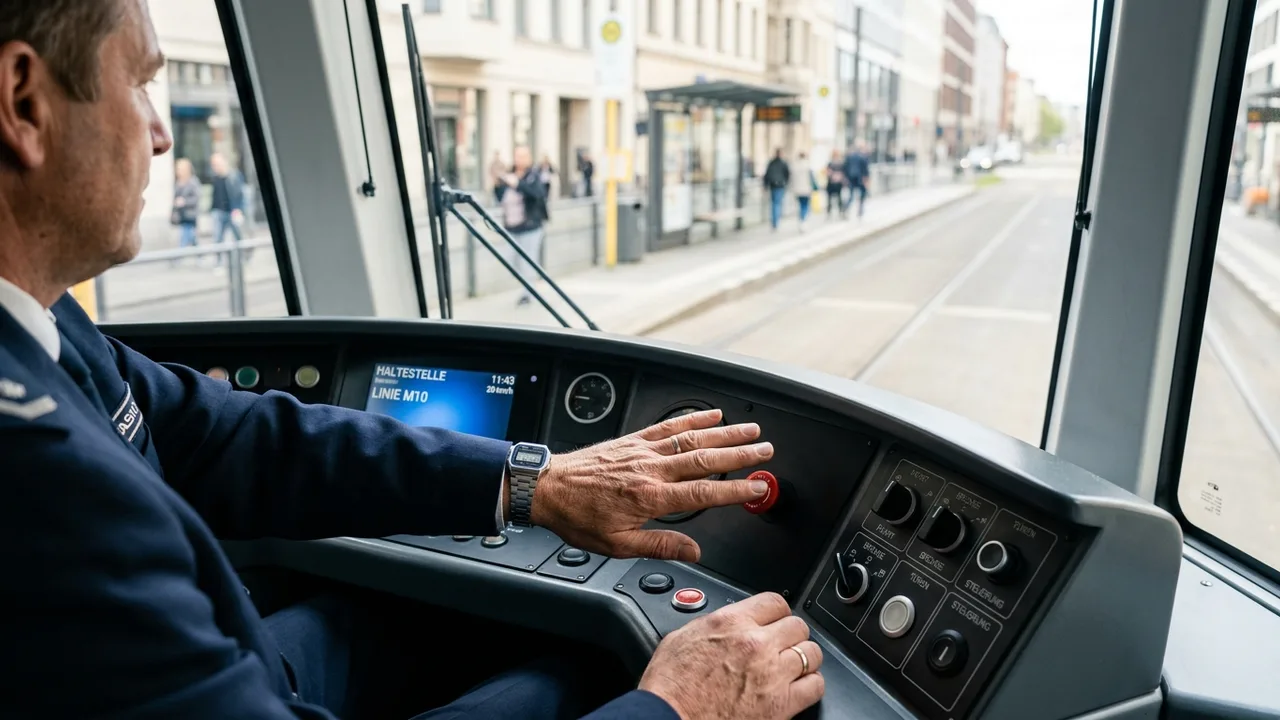
Bremer Straßenbahn AG is testing an **AI surveillance system** in its vehicles. The system, called "AI Watch," is designed to detect aggressive behavior among passengers early, thus ensuring greater safety in public transport. It is a development that balances the promise of increased security against serious questions about data protection.
What is happening in Bremen is more than a local test run; it is a glimpse into our **digital future**. AI acts like an invisible guardian, constantly analyzing our behavior patterns. This offers the chance for more safety in public spaces, but also raises massive questions about **data protection and freedom**. How much control do we give up to feel safer? And who monitors the monitors?
Specifically, Bremer Straßenbahn AG is testing an AI system called "AI Watch." This system analyzes video images from the passenger compartment to detect signs of **aggression or potential conflicts**. The goal is to inform the operating staff in time so they can intervene and de-escalate situations before they become critical. The system is currently being tested in selected trams.
For you as a normal passenger, this means that your movements and, under certain circumstances, your facial expressions are analyzed by an AI. Even if operators emphasize that no personal data is stored, a feeling of **constant observation** arises. This can undermine trust in public spaces and one's own privacy. The AI is like an **invisible intern** who logs every interaction in the room without you noticing.
Companies in the public sector, as well as private operators, face a dilemma. They want to increase the **safety of their customers and employees** but must also comply with legal data protection requirements. The use of such AI systems can make processes more efficient and minimize potential damage. However, they also carry the risk of **loss of user trust** and could lead to legal problems if data is not processed cleanly.
The technology offers the chance to proactively defuse conflicts. If a system truly **detects aggression early**, it could prevent physical assaults and significantly increase passengers' sense of security. This relieves staff and could make public transport more attractive for many people. It could also serve as a blueprint for other cities and modes of transport.