
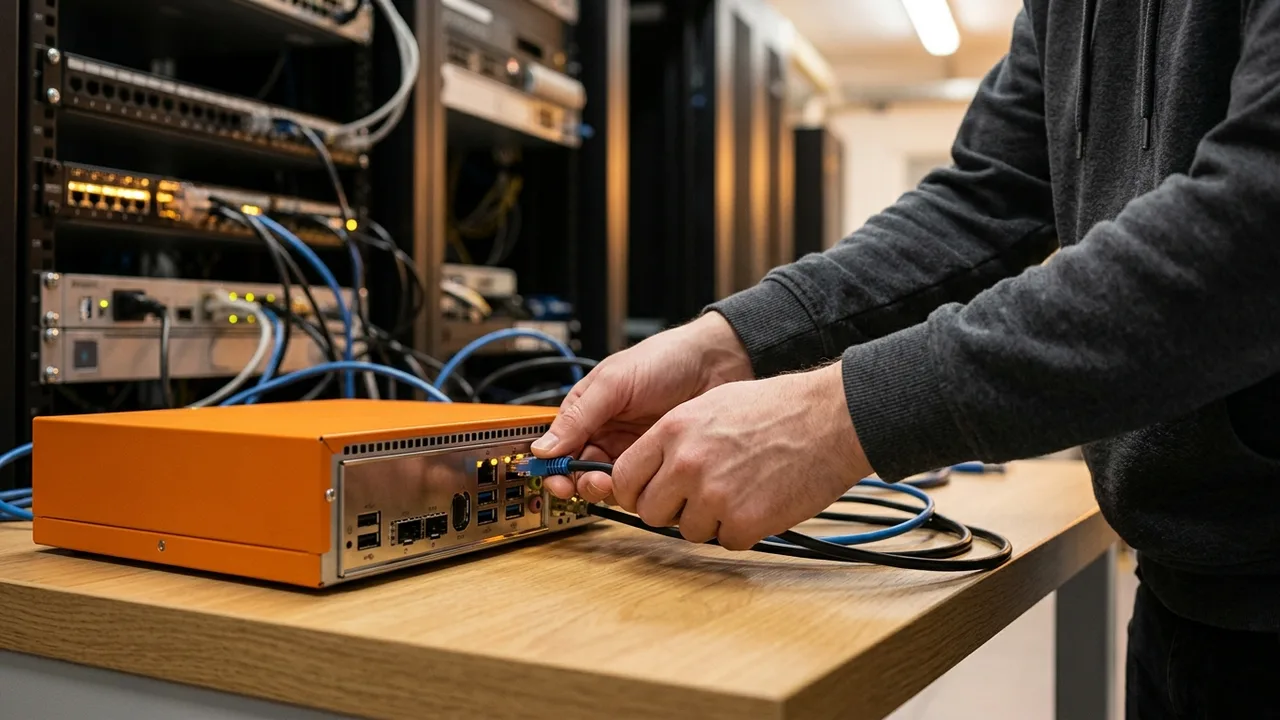
Your own AI server? What was previously reserved for large tech companies is now feasible for anyone with a Linux machine and a good graphics card. It's about **running your own language models** and retaining control over the data, instead of sending it to external providers. Open WebUI, an open-source project, makes exactly that possible.
This is important because it strengthens **digital sovereignty**. Those who host their AI models themselves retain full control over their data. Sensitive information never leaves their own network. For many companies and individuals, this is a crucial point to **minimize data protection risks** and not be subject to the terms of use of external providers. It is the path to more independent AI use.
Heise Online has published a detailed guide showing how to set up your own LLM server with **Open WebUI**. These open-source tools transform a normal Linux machine with a good graphics card into a full-fledged AI server. You can use it to run language models like the ChatGPT competitor Llama 3 locally and thus become independent of large cloud providers.
For you as an individual or freelancer, this means: You can **better protect your privacy**. For example, if you use AI to write personal texts or develop ideas, this information remains on your own computer. You are no longer dependent on large companies not using your data for their training models. This gives a sense of **control and security** when dealing with artificial intelligence.
For businesses, especially small and medium-sized ones, a lot changes. Imagine being able to enter your **customer or financial data** into an AI language model without fear of it falling into the hands of third parties. This opens up new possibilities for internal analyses, customer service, or product development, where strict **data protection requirements** previously blocked the use of cloud AIs. It is a way to leverage the benefits of AI without losing **data sovereignty**.
The biggest opportunity lies in **independence**. Companies can develop their own specialized AI solutions without being tied to the limits or costs of external providers. For developers, new business areas emerge around the implementation and maintenance of such **local AI infrastructures**. Even in areas like medicine, law, or administration, where data protection is extremely important, **AI assistants** can now be used securely.