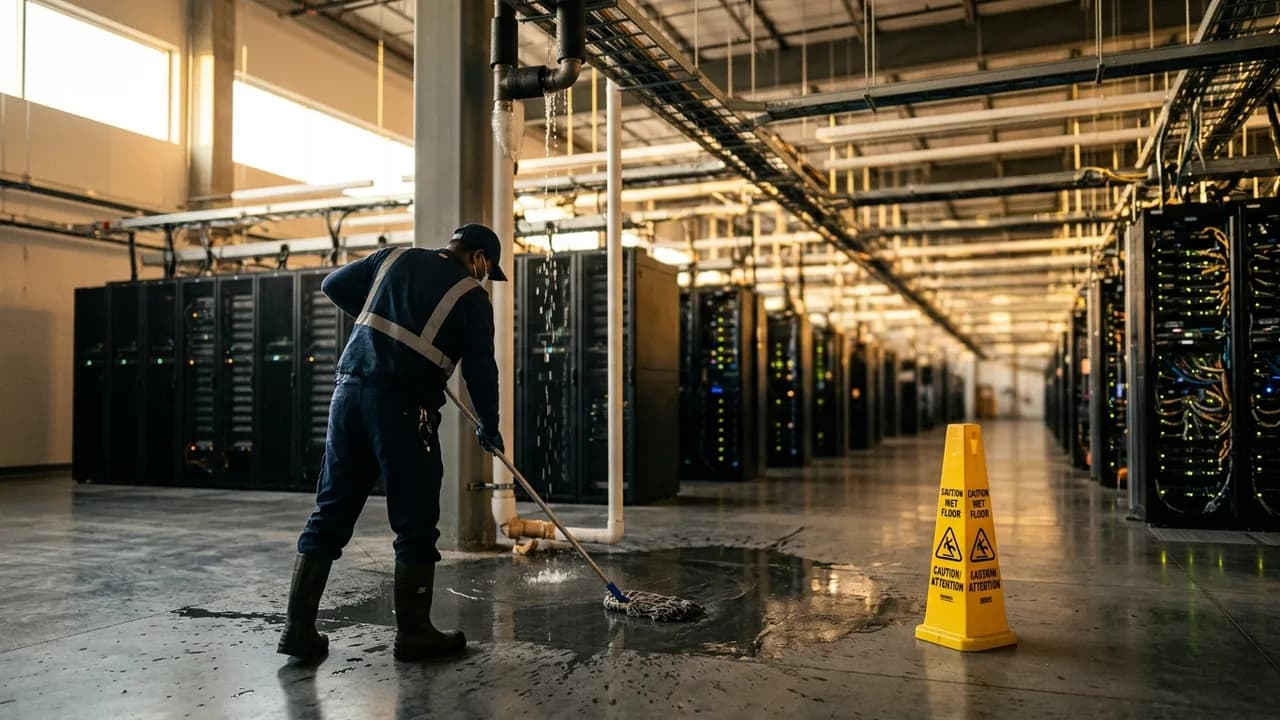
The climate crisis threatens our digital world. Data centers for Artificial Intelligence (AI) are particularly vulnerable. These centers consume a lot of energy and generate significant heat. Their operators severely underestimate this danger. This could become expensive for all of us.
This negligence is a major problem for our digital future. If data centers fail, AI no longer works. This affects many areas, such as logistics and research. It's about the stability of our systems. It's also about the costs and who pays them. Heat can shut down systems.
According to Golem.de, operators of AI data centers underestimate climate risks. These include extreme heatwaves and water shortages. The risk of damage to these facilities is much higher. It is higher than for normal data centers. This lack of risk assessment leads to: potential outages and higher costs are not sufficiently considered.
For you as a private individual, this means: Your favorite AI services could become more expensive. They could also be less reliable. If data centers have to reduce performance due to heat or water shortages, there can be consequences. ChatGPT response times could become longer. Streaming quality could be worse. Cloud storage could become slower. Your digital everyday life is directly affected if the technology falters.
Companies face significant cost and reputational risks. An outage of a data center running AI applications can halt the entire supply chain. Production processes can stop. Customer service can become impossible. This means direct financial losses. Customers are annoyed. A competitive disadvantage arises if other companies operate more stably. Those who do not prepare lose money and trust.
The crisis also offers opportunities for new solutions. Companies that invest in climate-resilient data centers can be leaders. This could include new cooling systems that use less water. Or locations in cooler regions. The development of AI models that consume less energy is also a great opportunity. This reduces consumption and decreases dependence on vulnerable technology.
The biggest risk is the concentration of power. If only a few weather-vulnerable data centers carry the entire AI load, the industry becomes very fragile. A local weather event could have global consequences. In addition, higher operating costs due to climate damage could be passed on to customers. This makes AI services too expensive for many. It also slows down new developments.