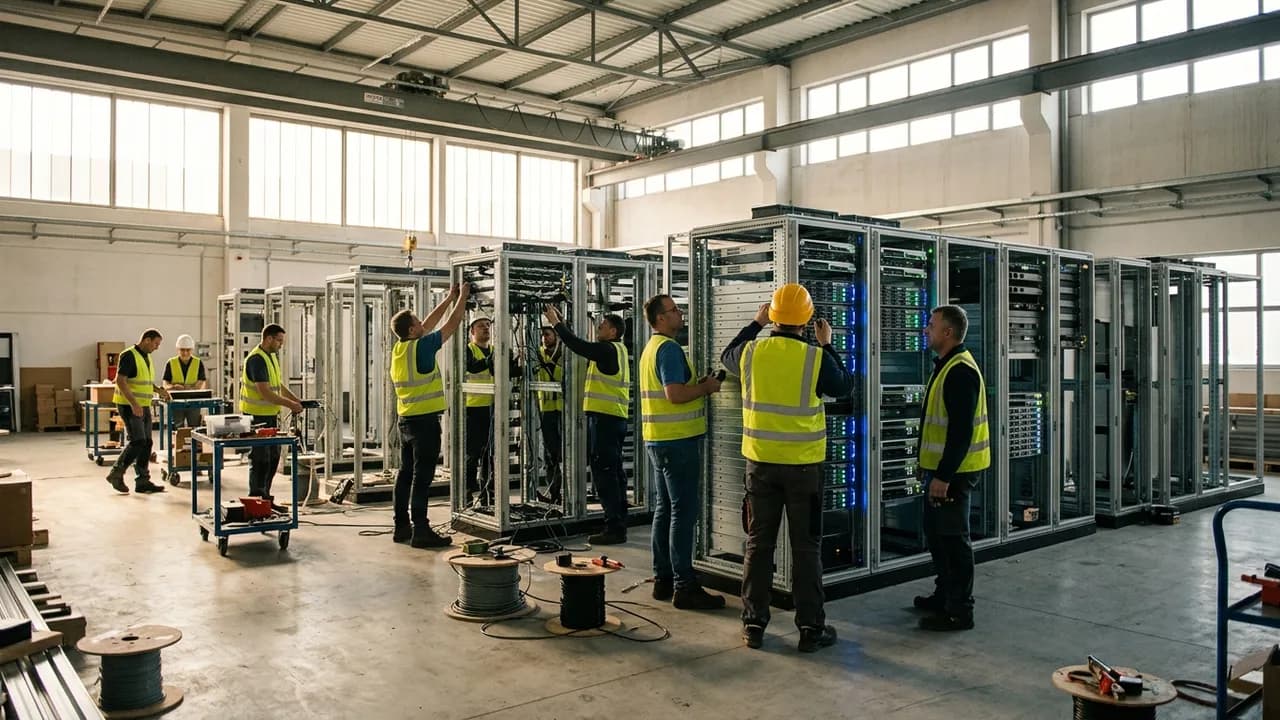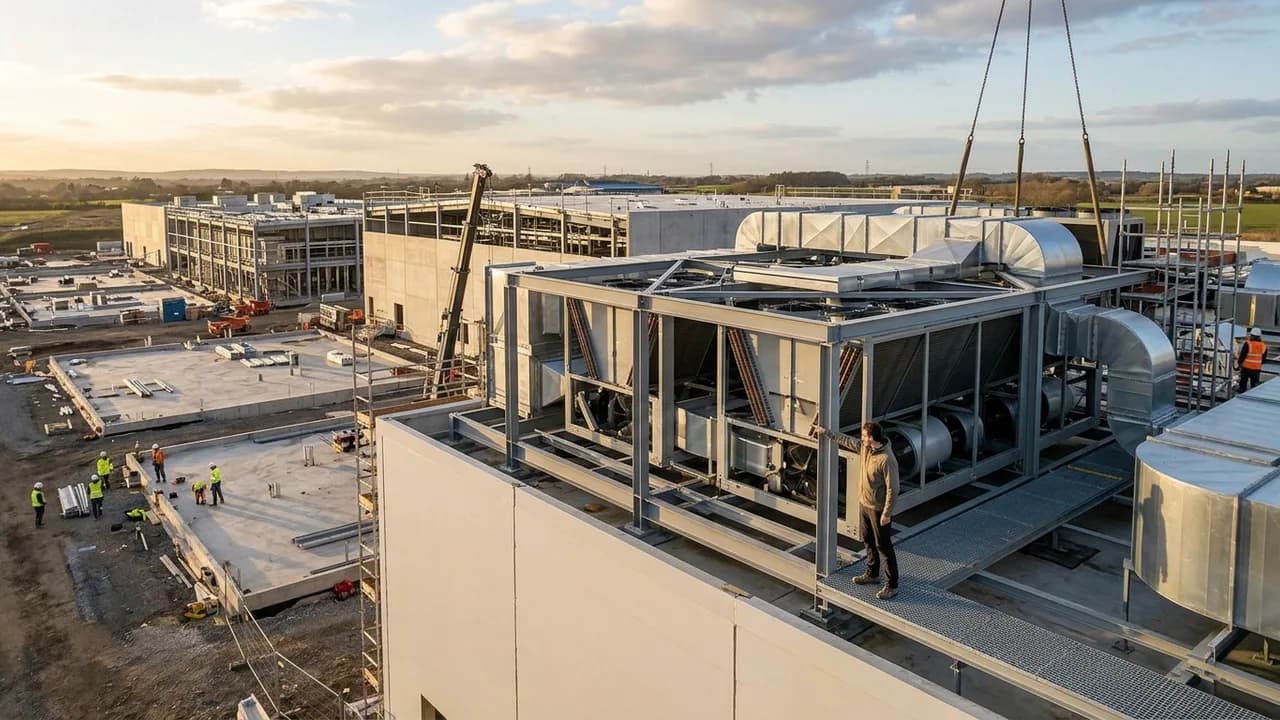
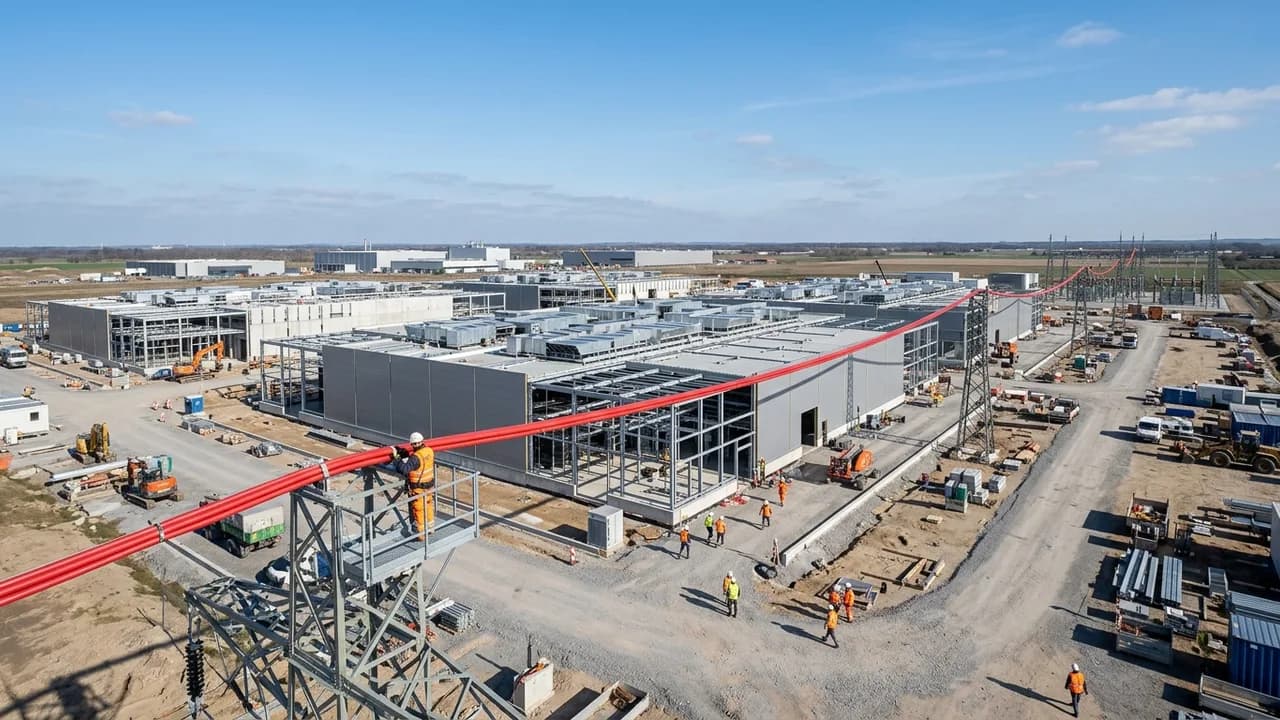
Microsoft is building its fourth large data center in North Rhine-Westphalia. With this, the tech giant is investing billions in Germany's **AI infrastructure**, meaning the huge computer halls needed for artificial intelligence. This expansion is a clear sign of the enormous hunger for computing power worldwide.
This investment is important because it shows how rapidly the demand for AI performance is growing. Every AI application we use needs these **huge computer halls** in the background. The downside: operating these centers consumes gigantic amounts of electricity. This not only poses major challenges for local power grids but could also drive up **electricity prices** for everyone.
Microsoft is massively expanding its presence in Germany. The company is building a fourth large facility in the Rhenish lignite mining region in Grevenbroich. This new hall is part of a **multi-billion investment** in AI data centers that Microsoft is making in North Rhine-Westphalia. The goal is to meet the huge demand for computing power for AI applications.
For you as a private individual, this could mean that your **electricity price** will continue to rise in the future. The demand for energy from data centers is enormous. At the same time, AI services you use could become faster and more reliable because the necessary infrastructure is closer to you. But it also raises the question of how sustainable our digital progress truly is.
Companies in Germany benefit from faster and more stable AI services directly on site. This can accelerate **digital transformation** and enable new business models. At the same time, companies must also expect rising energy costs, which will affect their operating expenses. Dependence on large cloud providers like Microsoft could also increase, raising questions of **data sovereignty**.
The new data centers create **jobs** in the region, both directly at Microsoft and at suppliers and service providers. They strengthen Germany as a location for digital infrastructure and research. Companies have opportunities to improve their products and services with more powerful AI, for example in logistics, customer service, or the development of new software. It is an **investment in the future** of the German digital economy.