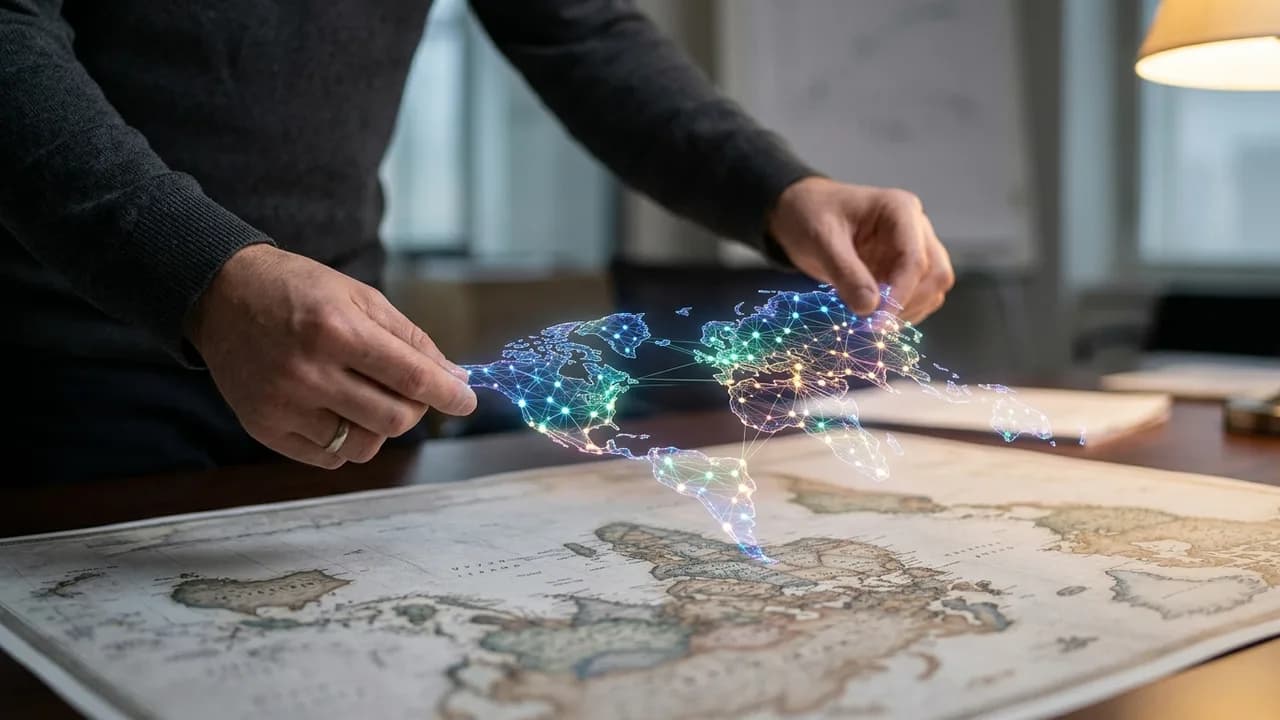
The US government wants to control the export and use of top AI models, such as those from OpenAI or Anthropic, more strictly. These regulations are primarily intended to make access from abroad more difficult. For you, this means: your use of AI tools could change, depending on where you live and work.
This US action is important because it could force a power shift in the global AI landscape. Whoever has access to the best models often controls innovation. If access is made more difficult, other regions like Europe must develop their own solutions, which reduces dependence on US tech – or creates new hurdles.
The US government plans to restrict access to highly advanced AI models like ChatGPT and Claude. This primarily affects international users and companies that rely on these technologies. The justification is national security interests, to control the spread of sensitive AI technology.
For you as a user, this can mean that certain **AI functions or models** are not available at all or are only partially available in Europe. Think of new features from ChatGPT or Claude that first launch only in the USA. It could also mean that European AI alternatives that disclose their blueprint (open-source) gain importance, even if they might be less powerful initially. Your daily life could therefore change due to **regional differences** in AI usage.
Companies in Europe face the challenge that the previously **easy access** to top models will be made more difficult. Those who previously relied on US models must now consider: Do we switch to European providers, invest in open-source solutions, or adapt to US rules? This can lead to **higher costs** and increased risk if dependencies arise. Companies must re-evaluate their **AI strategy** to avoid being left behind.
For Europe and open-source developers, there is a great opportunity here. If access to the large US models becomes more difficult, a vacuum is created. This could boost **investments in European AI research** and the development of its own, open AI models. For developers, this means more opportunities to contribute to **shaping an independent AI future**. Small companies could fill niches with specialized open-source solutions.
The biggest risk is a **fragmentation of the global AI landscape**. If each region has its own rules and models, cooperation becomes more difficult. For European companies, this may mean a **competitive disadvantage** if they cannot access the best models at the same level as US companies. There is also the risk that important **security standards** will be interpreted differently regionally and that technology will develop in different directions.