
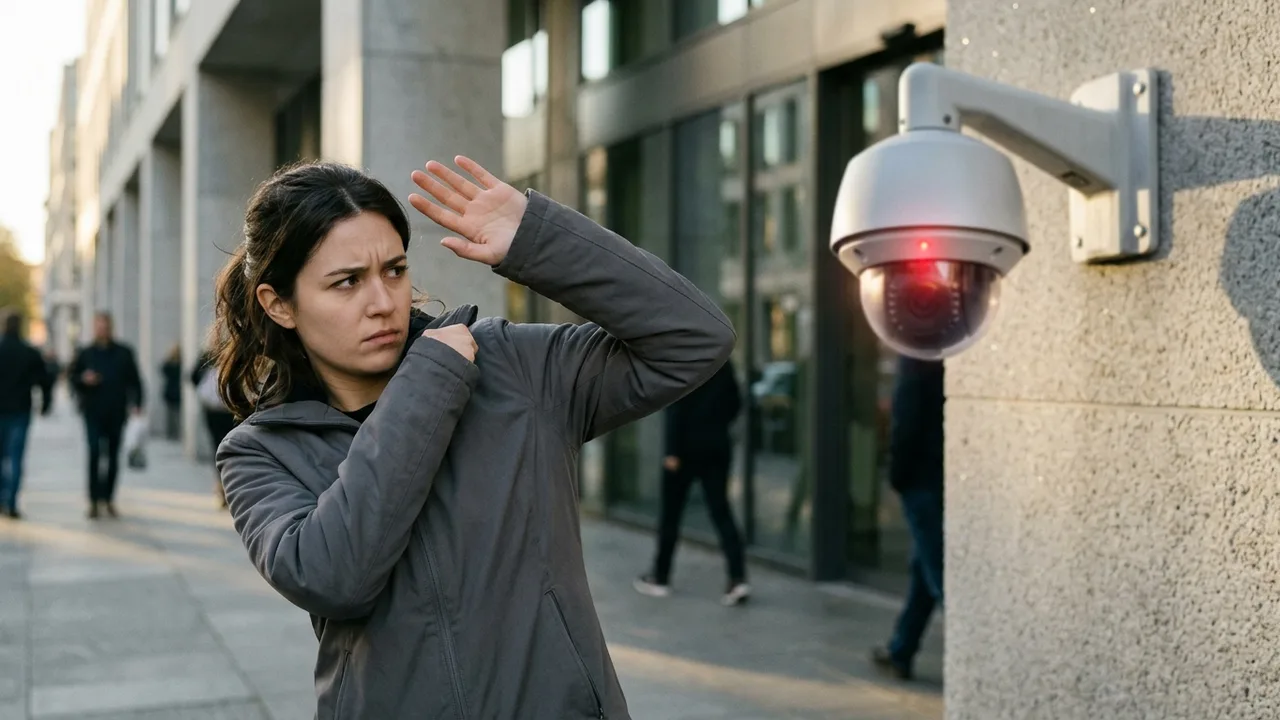
In Saxony, it is now official: the police may use artificial intelligence for facial recognition and searching. The Saxon State Parliament decided this after long discussions. For civil rights activists, this is an alarming step.
This law shifts the balance of power between the state and its citizens. It raises the question of how much **AI surveillance** we as a society are willing to accept. The regulation in Saxony could also become a **precedent for other federal states**, thus having far-reaching consequences for data protection throughout Germany. Those who do nothing now risk this technology growing unchecked.
After months of debate, the Saxon State Parliament has passed a new police law. This law allows the police to use **AI systems for automatic facial recognition**. The goal is to identify individuals in video footage or photos more quickly and to assist in searching. Civil rights activists such as the Chaos Computer Club and the Society for Civil Rights have expressed **sharp criticism** and warn of a massive infringement on fundamental rights.
For you as a private person, this means: Your **facial data could be scanned and matched** when you move in public spaces. The feeling of **anonymous movement** diminishes. The analogy is simple: Imagine an invisible police officer constantly matching your face against a list to see if you are wanted. This creates a climate of **potential surveillance**, even if you have nothing to hide.
Companies active in public safety may see **new market opportunities** here. At the same time, they must adhere to **the highest data protection standards** and ethical guidelines. For companies not directly affected, it is a signal: the state is increasingly relying on AI. This shows how quickly the **legal frameworks for AI** can change and what **new compliance hurdles** arise.
Proponents of the law primarily see an **increase in efficiency in crime fighting**. AI can analyze large amounts of video material or photos in a short time, which relieves human investigators. This is intended to help **solve crimes faster** and increase public safety. **New investments** could flow into the development of AI solutions in the security sector.
The biggest risks lie in **data protection and privacy**. Civil rights activists warn of **potential misuse** of the technology and the danger of a **widespread surveillance state**. There is concern that the systems may work inaccurately or lead to **misidentifications**. Furthermore, it is unclear how long the data will be stored and how it will be protected. The law could also find **imitators in other federal states**.